

ホワイト・ペーパー
Wi-Fiゲートウェイをスマートホーム向けのマルチプロトコルIoTインフラストラクチャに変換
このホワイトペーパーでは、従来のWi-Fi専用ゲートウェイをエネルギー効率が高く、高性能で、将来も使えるマルチプロトコルIoTインフラストラクチャに変え、何百万ものスマートホームに展開する方法を学びます。
このホワイトペーパーでは、Wi-FiゲートウェイにMatterおよびThread 802.15.4 プロトコルを導入する際の主な課題について説明します。 また、メーカーとインターネットサービスプロバイダ(ISP)が、IoT対応Wi-Fi ホームゲートウェイ上でWi-Fi共存、アンテナカバレッジ、エネルギー消費を最適化するための 3 つのソリューションについて説明します。テスト結果と計算が含まれており、ワイヤレスパフォーマンスの向上、アンテナカバレッジの改善、ゲートウェイの省エネの可能性を定量化します。
ブロードバンドからスマートホームへ
世界の固定ブロードバンドインターネット接続の数は、2000年代の最初の20年間で2億から15億に増加しました。しかし、OECD Broadband Portalによると、今日、ほとんどの先進国の固定ブロードバンド市場は飽和状態にあります。これにより、インターネットサービスプロバイダ(ISP)間の競争が激化し、顧客獲得コストの増加、価格の下落、解約率の上昇を引き起こし、最終的にISPの財務パフォーマンスに影響を与えています。
スマートホームサービスとIoT接続技術は、インターネットおよび通信サービスプロバイダがブロードバンド事業を拡大するための最も有望なビジネス分野の一つとして急速に台頭しています。その利点としては、次のようなものが挙げられます。
ビジネス – スマートホームとIoTは、サービスプロバイダが新しい収益源を実現し、顧客の付加価値を改善すると共に、顧客維持を強化し、サブスクリプション型ビジネスを改善するのに役立ちます。
ポジショニング – OpenThread Border Router (OTBR) 機能などのホームIoTインフラストラクチャを所有することで、サービスプロバイダは、より大きなスマートホームエコシステムにおける戦略的地位を確立し、Amazon、Apple、Google、Samsungなどのグローバルなスマートホームブランドと共に有意義で持続的なビジネスを展開できるようになります。
データ – IoTスマートホームデバイスの制御と監視は、サービスプロバイダに貴重なユーザ行動データを提供し、将来のサービスや製品をより適切に位置づけることが可能になります。
Wi-FiからマルチプロトコルIoTへ
スマートホームの消費者向けデバイス市場は急速に拡大していますが、高帯域幅で電力消費の大きいWi-Fiは、すべてのデバイスタイプに最適な接続プロトコルではありません。実際、スマートロック、サーモスタット、接触センサーなど、多くの新しいIoTデバイスは、Thread、Zigbee、Z-Wave、Bluetooth Low Energy (LE) などの、より省エネルギーで軽量なメッシュ接続技術の恩恵を受けることになるでしょう。大手ISPと通信事業者は現在、スマートホーム事業に備え、そしてエコシステムにおける自らの地位を確立するために、従来のWi-Fi顧客宅内機器 (CPE) に新たなIoT機能を統合し始めています。
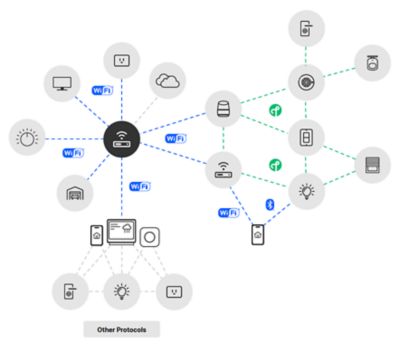
図1 ISPは、従来のWi-FiのみのCPE設置ベースを、Wi-Fiを補完する形でThread 802.15.4、Zigbee、Bluetooth LE、その他の低消費電力ワイヤレスプロトコルを追加することにより、マルチプロトコル対応のIoTホームインフラストラクチャへと変換しています。
ISPスマートホームの課題
私たちは今、ISPがコネクテッドスマートホームのワイヤレスIoTインフラストラクチャを自ら保有することが自らの役割であると認識し始めている様子を目の当たりにしています。しかし、その多くが直面している主な課題は、従来のWi-Fi専用CPEインフラストラクチャであり、これは歴史的にThread、Zigbee、Z-Wave、Bluetooth LEなどの低消費電力IoT接続技術をサポートしていない点です。その結果、Wi-Fiのみの環境からマルチプロトコルIoTの世界へ移行することで、次のような新しい技術的課題が生じます。
- 家庭内にOpenThread Border Router (OTBR) などのIoTアンカーポイントを確立する方法
- 共有2.4GHz帯域でのワイヤレス共存を最適化する方法
- Wi-Fiスループットを損なうことなく、低消費電力のIoTパフォーマンスを最大化する方法
- ゲートウェイアンテナのカバレッジを拡大し、家庭内でのワイヤレスユーザ体験を向上させる方法
- 新しいエネルギー規制に適合させるために、ゲートウェイの消費電力を削減する方法
スケーラブルでエネルギー効率が高く、将来を見据えたマルチプロトコルIoTインフラストラクチャを構築し、何百万世帯に展開するにはどうすればよいでしょうか?
マルチプロトコルIoTインフラストラクチャを構築する
IoTプロトコル
スマートホームIoTデバイス市場は急速に拡大しており、Wi-Fiは、そこで利用される多くのワイヤレスプロトコルの1つに過ぎません。Amazon、Apple、Googleなどのエコシステム提供業者は、Wi-Fi、Thread、Bluetooth LEなどのプロトコル上の共通のデバイスデータモデルを用い、デバイスがエコシステムの境界を越えて通信できる統一規格であるMatterプロトコルにより、サイロ化されたスマートホームエコシステム業界を統一するべく登場しました。
同時に、Appleなどのグローバルな消費者向けデバイスメーカーは、スマートフォン、タブレット、ノートパソコン、テレビにThreadを組み込み、ユーザがスマートホームデバイスを簡単に操作できるようにしています。このようにして、彼らはマルチプロトコルのスマートホームの実現に向けた進化を加速しています。
Matterは主要なスマートホームワイヤレス技術になりつつありますが、唯一の技術ではありません。Zigbeeは、依然として、スマート照明やスイッチ、その他多くの用途に最適な、確立された超軽量メッシュプロトコルであり続けています。サブGHz帯のメッシュプロトコルであるZ-Waveは、ホームセキュリティや監視など、超低消費電力と超長距離通信を必要とするアプリケーションを継続的にサポートしています。結論として、多くの関連プロトコルはMatterと共存し、標準ベースのブリッジングソリューションを介してエコシステムに統合することさえ可能です。
しかし、このホワイトペーパーでは、サービスプロバイダがMatterにおける課題と機会を探るのを支援することに重点を置いています。ここでは、既存のWi-FiサービスをThreadで拡張し、Matterで両方のワイヤレス接続技術をカバーできるようにするソリューションを紹介します。
Matter Gateway
ワイヤレスIoTインフラストラクチャの実現は、スケーラブルで将来性のあるスマートホームビジネスに向けた第一歩です。Wi-Fiはホームネットワークの最も普遍的な基盤であることが証明されており、事実上、すべてのサービスプロバイダはすでに消費者向けホームゲートウェイでWi-Fiを提供しています。しかし、スマートホームデバイスの未来は、Wi-Fiだけにとどまりません。それは、すべてのデバイスタイプに最適なワイヤレスプロトコルであるわけではありません。Matterが引き続き勢いを増し、家庭に普及していくと仮定すると、ホームインフラストラクチャがWi-Fi、Thread、Bluetooth LEなど、Matterを構成するすべてのものをサポートすることは理にかなっています。
Threadネットワークに参加するには、Threadの無線をホームゲートウェイまたはルーターに組み込む必要があります。これにより、ゲートウェイまたはルーターがOpenThread Border Router (OTBR) になります。OTBRは、Thread境界ルーターのオープンソース実装で、ThreadネットワークとWi-Fiなどの他のIPネットワーク間のゲートウェイとして機能します。さらに、この無線により、OTBRはThreadネットワークコントローラーまたはアクセスポイント (AP) にもなります。Wi-Fi APと同様、チップはゲートウェイに統合され、Threadチップも同様にThreadネットワークと、そのネットワークに入るThreadデバイスを制御します。
Wi-Fi専用接続プロバイダから、顧客に対して付加価値のある完全なスマートホームアプリケーションを提供する事業者へと役割を拡張したい場合、Silicon LabsのMG21とMG24が、CPE上でMatterゲートウェイ機能を実現します。これにより、家庭内のIoTネットワーク全体を可視化し、そのネットワークからデータを収集し、制御し、最終的にバンドルされたデバイスとアプリケーションのブランド化されたMatterエコシステムを通じて収益を増やすことができます。
ゲートウェイでのWi-Fi共存
ブロードバンドからスマートホームへ
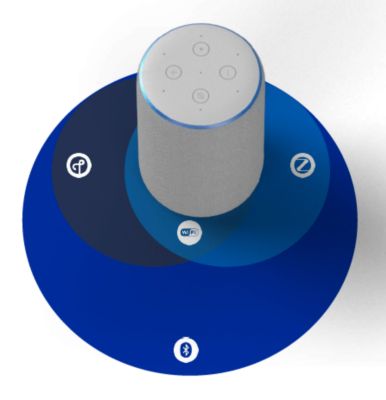
従来のWi-Fi専用CPEでは、サービスプロバイダは 2.4GHz帯域でのマルチラジオ/マルチプロトコル干渉について心配する必要はありませんでした。帯域全体がWi-Fiで利用可能でした。しかし、Wi-Fiと802.15.4やBluetooth LEのようなIoT無線を組み合わせた新しいスマートホームゲートウェイが登場することで、サービスプロバイダは、以下のような新たな課題に直面することになります。
- 受信機 (RX) の感度を高めて、ゲートウェイのIoTネットワークパフォーマンスを最適化する方法
- Wi-Fiスループットを損なうことなくIoTプロトコルのRFパフォーマンスを最適化する方法
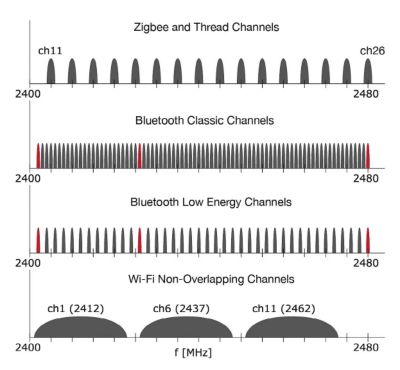
Wi-FiとワイヤレスIoTプロトコルは、変調方式、チャネル周波数、帯域幅が異なりますが、同じ2.4GHz帯に共存する場合には重複する可能性があります。1つのワイヤレスプロトコルからの信号は、他のプロトコルにとって不要なノイズとして現れます。希望する受信信号がノイズよりも弱い場合、無線機はメッセージを正しく受信できません。
ワイヤレス共存技術により、Wi-Fi、Thread、Zigbee、Bluetooth LEなどの複数の技術が、ある無線の信号が隣接する無線に干渉することなく、2.4GHz帯で動作できるようになります。Wi-Fi共存をゲートウェイに実装する代替手段はいくつかあり、一般に「非管理型」と「管理型」の技術に分類されます。
非管理型Wi-Fi共存
非管理型Wi-Fi共存技術には、一般的に異なる周波数帯で無線を分離すること、プロトコルスタックのパラメータ調整、アンテナ間の分離度の向上などが含まれます。下の表は、非管理型Wi-Fi共存ソリューションの概要を示したものです。
スマートホームデバイスとゲートウェイは、より高いWi-Fi送信出力とスループットへと向かう傾向にあります。非管理型共存技術では、こうした高デューティサイクルのWi-Fiユースケースに対応できません。Silicon Labsでは、マルチプロトコルIoTゲートウェイに管理型共存ソリューションを導入することを推奨しています。しかし、管理型ソリューションを補完するために、非管理型共存技術も引き続き推奨されます。
非管理型共存技術
| 周波数分離 | 20MHz Wi-Fi帯域幅 | アンテナの分離 | プロトコル構成の最適化 |
| Wi-Fiが他のプロトコルをブロックするのを最小限に抑えるため、Wi-FiプロトコルとIoTプロトコルは、通過帯域内で、互いに大きく離れた位置(低いチャネル周波数と高いチャネル周波数)に設定されます。 | OFDMサブキャリアによる三次歪み生成物のサイドバンドがIoTプロトコルを妨害しないよう、Wi-Fiを20MHzで動作するように設定します。 | アンテナの分離度(距離、指向性)を高めてEFR32受信範囲を改善することで、IoT無線が受けるWi-Fiエネルギーを最小限に抑えます。 | 干渉する送信の重複を最小限に抑えるために、プロトコルパラメータを構成します。 |

管理型Wi-Fi共存
管理型Wi-Fi共存は、高出力Wi-Fi無線および高スループットのトラフィックを伴うマルチプロトコルIoTゲートウェイの前提条件です。管理型共存技術は、同一場所に配置された Wi-Fi、802.15.4、およびBluetooth無線の共有周波数帯域へのアクセスを能動的に調整し、送信の重複を防ぎます。
下の表は、Silicon LabsのEFR32マルチプロトコルワイヤレス IoT製品で利用可能な3つの高度な管理型Wi-Fi共存ソリューションの主な側面を説明しています。
- パケット伝送アービトレーション (PTA)
- デューティサイクル型PTA(別名PWM)
- Signal Identifier(Silicon Labsの特許取得済み)
管理型共存ソリューション
| PTA | デューティサイクル型PTA | Signal Identifier |
PTAは、Wi-FiおよびIoTプロトコル (802.15.4、Bluetooth) が共有する2.4GHz帯へのアクセスを能動的に調整します。IoT用のTXおよびRXウィンドウを確保するために、アイドル時間スロットを要求します。 ゲートウェイからの高デューティサイクルWi-Fi送信はIoT無線をブラインド化するため、IoTプロトコルが共有する2.4GHz帯にアクセスできる確率が低くなります。IoTスループットを低下させます。 | デューティサイクル型PTAは、定期的にWi-Fiを中断して、IoT信号 (802.15.4、Bluetooth) 用の十分なアイドルウィンドウを取得します。 定期的な中断は、たとえ受信すべきIoTパケットが存在しない場合でも、Wi-Fiのスループットを低下させます。 | Signal Identifierは、Wi-Fiのフレーム間隔 (IFS) 中にパケットの任意の部分からIoT 信号 (802.15.4、Bluetooth) を検出します。IoT信号が検出された場合にのみWi-Fiを中断します。Wi-Fiスループットの低下を最小限に抑えます。アクティブなIoTトラフィックがある場合にのみ、Wi-Fiを停止します。高デューティサイクルのWi-Fiと低消費電力IoTが同一場所に共存する場合、最適なバランスを提供します。 |

パケット送信アービトレーション
パケット伝送アービトレーション (PTA) は、IEEE 802.15.2 (2003) 規格の6項に最初に記載されていた推奨事項であり、同じ周波数帯域で異なる無線プロトコルを使用する同一場所に配置された無線間でパケット衝突を低減するために、802.11b (Wi-Fi) と 802.15.1 (Bluetooth Classic) の共存に対処する目的で導入されたものです。
Silicon LabsのEFR32製品は、802.15.4 (Thread、Zigbee) とBluetooth LEプロトコル、および隣接するWi-Fi無線間の共有メディアアクセスを調整するためにPTAをサポートしています。EFR32が共有帯域へのアクセスを必要とする場合、Wi-Fiデバイス(GPIO 経由)に信号を送信し、Wi-Fi送信を延期してメディアを解放します。以下の複数のPTAネゴシエーションプロトコルが利用可能です。1線式、2線式、3線式、4線式。
PTAの仕組み
PTAは、同一場所に配置され、共通の周波数帯を共有するメイン無線とセカンダリ無線の間で送信を調整します。PTAのメイン側は、2つの無線デバイス間のGPIO接続を介して交換されるハンドシェイク信号に基づいて、任意の時点で2つの無線のうちどちらが送信できるかを決定します。PTAのセカンダリ側は、両デバイスのパケット転送要件に基づいてハンドシェイク信号で応答します。PTAは、次のプロセスで動作します。
- IoTデバイスは、パケットの送受信リクエストをアサートします。このリクエストには、オプションで優先度レベルを含めることができます。
- Wi-Fi無線デバイスがリクエストを受け入れ、IoT送受信用のタイムスロットを割り当てます。
- Wi-Fiデバイスが送信を停止し、IoTデバイスが送受信できるようになります。
- 完了すると、IoTデバイスはリクエストのアサートを解除し、Wi-Fiデバイスは割り当てを解放します。
デューティサイクル型PTA
IoT無線は、いつ受信パケットが到来するかを事前に知ることができないため、パケットを検出して受信するために、そのプリアンブル部分をキャプチャする必要があります。Wi-Fi送信デューティサイクルが増加すると、プリアンブルを正常にキャプチャするのに十分なアイドル期間が減少し、IoTパケット損失と再試行が増加します。
デューティサイクルPTA(別名 PWM)では、EFR32IoT無線には、隣接するWi-Fi無線からのメディアアクセスを要求する定期的かつ周期的な時間枠があります。ただし、Wi-Fiは各PTAリクエストに対してアクセスを許可するかどうかを、その裁量に基づいて決定します。
Wi-Fi送信を中断する定期的なリクエストのおかげで、デューティサイクル型PTAは、ゲートウェイから大量の2.4GHz Wi-Fi送信がある場合、IoT無線が共有メディアにアクセスする機会を増やすことができます。デューティサイクル型PTAの欠点は、たとえIoTの活動がなくても、Wi-Fi 2.4 GHzのパフォーマンスが低下することです。さらに、Wi-Fiネットワークのダウンを防ぐため、PTAのリクエストを行う正確な時間枠とデューティサイクルをWi-Fiビーコンと調整する必要があります。
Signal Identifier
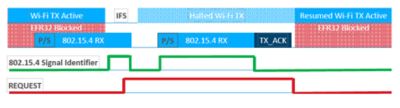
デューティサイクル型PTAは、Wi-Fi 2.4GHz帯での大量な送信でIoTパフォーマンスを向上させますが、次のような場合、欠点が生じる可能性があります。アクティブなIoTトラフィックがない場合でも、Wi-Fiスループットが低下します。Signal Identifierは、Wi-Fiフレーム間隔 (IFS) 中にIoT信号 (802.15.4, Bluetooth) を検出するSilicon Labsの特許技術です。IoT信号が検出された場合にのみWi-Fi無線を中断します。Signal Identifierは、パケットストリームの任意の部分からIoT信号を検出できます。つまり、プロトコルのプリアンブルヘッダーをキャプチャすることは必須ではなく、これにより検出確率が向上し、再送回数が削減されます。Signal IdentifierはPTAと連動します。信号の検出に成功するとPTAリクエストがアサートされ、Wi-Fiの送信が停止されて共有メディアが解放されます。
Signal Identifierの仕組み
802.15.4信号検出器がWi-Fi IFS中に信号を検出すると、PTAリクエストがアサートされてWi-Fi送信を停止し、再送信されたIoTパケットを受信できるようにします。デバイスが確認応答で確認されたIoTパケットを正常に受信すると、要求は解除されます。802.15.4パケットがプログラム可能な受信再試行タイムアウト内に受信されない場合、PTAリクエストは解除され、Wi-Fi動作が再開されます。
管理型Wi-Fi共存ソリューションの比較
次のテストでは、管理型共存ソリューションがない場合のシナリオと比較して、デューティサイクル型PTAとSignal Identifier管理型共存ソリューションの長所と短所を示します。テストセットアップでは、Wi-Fi 4を実行するSilicon Labs WF200と、Zigbeeを実行するEFR32MG24を使用して、同一場所に設置されたWi-Fi 2.4GHz無線と802.15.4無線で構成されるマルチプロトコルIoTゲートウェイをシミュレートします。WF200は、WiFi 2.4GHz データを高い送信デューティサイクルでストリーミングします。EFR32MG24には、リモートデバイスからゲートウェイに到着するパケットをシミュレートするために、低信号レベルで定期的な802.15.4パケットが送信されます。
| テストケース | テスト結果 - パフォーマンスへの影響 | まとめ | |
|---|---|---|---|
| Wi-Fi 2.4GHz | 802.15.4 | ||
| 管理型 共存なし | Wi-Fiが帯域を支配 最大スループットの低下はほぼなし | 低い802.15.4パフォーマンス。 ~20–30% パケット損失(アプリケーションレベル) ~200–400% 再試行(MACレベル) | Wi-Fiスループットは高いが、802.15.4パフォーマンスは大幅に低下。 |
| デューティサイクル型PTA (80% Wi-Fi、20% 802.15.4) | Wi-Fiは、IoTトラフィックが存在しない場合でも、802.15.4のアイドル時間を定期的に割り当てる。 最大スループットが~7–15%低下 | 改善されたパフォーマンス 802.15.4には受信専用のタイム スロットがある。 ~0% パケット損失 ~40% 再試行 | 802.15.4に定期的な帯域アクセスを許可しているため、Wi-Fiのスループットは明らかに影響を受ける。 |
| Signal Identifier | Wi-Fiは、IoTトラフィックが存在する場合に802.15.4のアイドル時間を割り当てる。 最大スループットの低下はほぼなし | 改善されたパフォーマンス 802.15.4無線は、Wi-Fi IFS中にIoTトラフィックを受信待ちする。 ~0% パケット損失 ~30–50% 再試行 | Signal Identifierは、以下の最適なバランスを実現します。 アクティブなトラフィックがある場合、802.15.4のための十分な容量を確保しつつ、最高のWi-Fiのスループットを維持します。 |
結論 – 適切なWi-Fi共存ソリューションを選択する
マルチプロトコルIoTゲートウェイを開発する場合、ゲートウェイのメーカーまたはサービスプロバイダは、複数の管理型Wi-Fi共存ソリューションから選択できます。しかし、すべてのソリューションが同じというわけではありません。
- このテストケースでは、管理型共存ソリューションを選択しない場合、エンドユーザは十分なWi-Fi 2.4GHzスループットが得られ、パフォーマンスはわずかに低下するだけです。しかし、802.15.4デバイスのユーザは、Wi-Fi 2.4GHzがIoTトラフィックをかき消す傾向があるため、パフォーマンスが著しく低下しかねません。
- デューティサイクル型PTAは、IoTトラフィックのために定期的な受信間隔を設けることで、802.15.4のパフォーマンスを大幅に向上させます。しかし、Wi-Fiの送信は定期的に停止されるため(IoTトラフィックが存在しない場合でも)、Wi-Fi 2.4GHz の最大スループットが最大~7-15%低下する可能性があります。
- Signal IdentifierとPTAに基づく管理型共存ソリューションは、Wi-Fiと802.15.4のパフォーマンスの最適なバランスを実現します。このテストケースでは、最大スループットをほとんど低下させることなく、Wi-Fi 2.4GHz への影響を最小限に抑えながら、アクティブなIoTトラフィックがある場合には、802.15.4(Zigbee、Thread)プロトコルが共有メディアに十分アクセスできるようにします。
Wi-Fiの共存に関する詳細は、UG103をご覧ください。17Wi-Fi共存の基礎
ゲートウェイアンテナのカバレッジ
どの家庭も、インターネットサービスプロバイダにとって、それぞれ特有の無線環境上の課題を抱えています。プロバイダは、家庭内のどこにCPEが配置されるかを制御できません(加入者は通常、CPEをブロードバンドの壁面コンセントの近くに配置します)。その結果、ゲートウェイアンテナのカバレッジは家庭によって異なり、ワイヤレスIoT接続性やユーザ体験が予想しにくくなります。
マルチパス伝搬
家庭内の金属物体は電波を反射し、複数の伝送経路が生じるため、アンテナにおいて干渉が打ち消し合うことで深い減衰が発生しかねません。IoTデバイスにはさまざまなアンテナの種類と配置があり、ゲートウェイとデバイス間の偏波損失につながる可能性があります。多くのルーターやゲートウェイの工業デザインにおけるコンパクトなフォームファクタは、IoT アンテナの反対側に深いヌル(信号の落ち込み)をもたらす可能性があります。どの家庭にも特有のRF環境があり、RFの問題はユーザ体験を悪化させ、不満を引き起こし、その結果サービスプロバイダのカスタマーサービスセンターに負担がかかり、運用コストを増加させる可能性があります。
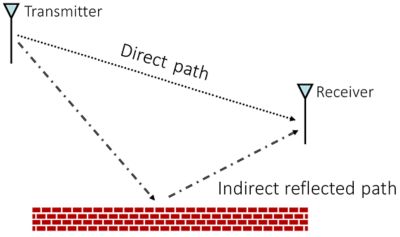
マルチパス伝搬:見通し線 (LOS) の信号経路と反射信号の比較

アンテナ・ダイバーシティ
Silicon Labs MG24マルチプロトコルSoCで利用可能な802.15.4向けアンテナダイバーシティは、2本のアンテナを使用して家庭環境における潜在的なRFの問題を解消するための技術です。アンテナダイバーシティは、2本のアンテナを絶えず切り替えることで受信パフォーマンスを改善するのに役立ちます。一方のアンテナで信号が検出されると、もう一方のアンテナがサンプリングされて、どちらのアンテナの信号品質がより良いかを判断します。次に、最良の信号を受信できるアンテナを使用して、パケットの残りの部分を受信します。アンテナの切り替えは、感度に影響を与える可能性があります。しかし、アンテナダイバーシティによって得られる RFパフォーマンスの改善は、潜在的な感度低下の欠点を上回ります。
アンテナは、反射によるマルチパスからの破壊的干渉を避けるために離して配置できます。ゲートウェイデバイスのフォームファクタによっては、アンテナを離して配置することで、ゲートウェイ周囲のアンテナ放射パターンをより均一にすることもできます(下図を参照)。図では、単一アンテナからの信号はゲートウェイユニットの筐体によって一部の方向で遮られています。ダイバーシティにより、すべての方向で信号カバレッジが得られます。ダイバーシティアンテナは互いに逆の偏波で実装でき、ゲートウェイアンテナとIoTエンドデバイスのアンテナ間で発生する偏波損失の回復に役立ちます。
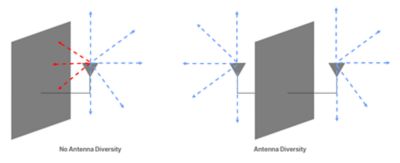
アンテナダイバーシティは、特に信号条件が通信範囲限界の感度レベルに近い場合や、厳しいRF条件下で、IoTホームゲートウェイにおける無線リンクバジェットおよび通信範囲を大幅に改善できます。Silicon Labsは、サービスプロバイダがゲートウェイマイクロコントローラ上で追加のファームウェアを実装する必要がなくなる、内蔵型アンテナダイバーシティアルゴリズムを提供します。これにより、アルゴリズムの開発とデバッグを行うことなくアンテナダイバーシティの利点が得られ、より堅牢なソリューションと製品化までの時間短縮につながります。
実際の家庭におけるゲートウェイアンテナのカバレッジテスト
実際の家庭環境におけるアンテナダイバーシティの利点を実証するため、次の2つのシナリオでアンテナカバレッジを比較するテストを実施しました。アンテナダイバーシティがあるIoTハブと、アンテナダイバーシティがないIoTハブ。
2台のEFR32MG24デバイスを用いて、アパート内の複数の場所で一連の受信信号強度インジケータ (RSSI) 測定を実施しました。そのうちの1台にはアンテナダイバーシティ無線ボード (BRD4188B) を搭載し、IoTハブを想定して固定の場所に配置しました(間取り図のルーター/ハブアイコンを参照)。もう1台のデバイスは、任意のIoTデバイスを想定してアパート内を移動させました。それ以外の点では、RSSI測定を行っている間、環境は静止状態でした。両方のデバイスではレンジテストアプリケーション(Simplicity Studioで利用可能)を実行し、複数の場所でのRSSI値の測定を簡素化しました。
以下の2つのヒートマップ図は、両方のシナリオでアパート内の異なる場所で測定されたRSSI値を示しています。赤はRSSI値が低い領域を示し、受信電力(受信感度)が低く、アンテナカバレッジが弱いことを表します。緑は、RSSI値が高い領域を示し、受信電力(受信感度)が高く、アンテナカバレッジが強いことを表します。黄色は、許容可能な電力レベル(受信感度)の領域を示します。
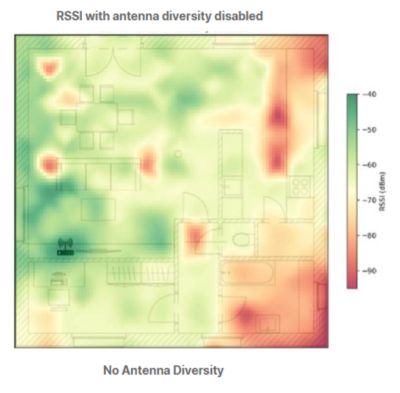
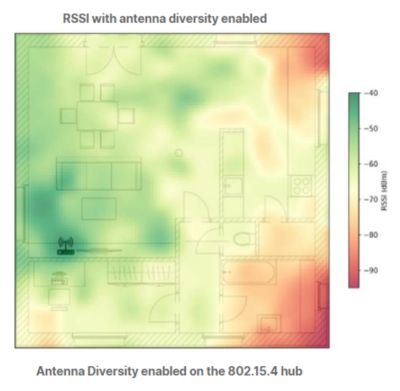
アンテナダイバーシティなしのシナリオの間取りの一部の領域では、RSSI値が急激に低下する「ブラインドスポット」があります(フロアマップ上の赤いスポット)。これは、マルチパス伝搬によって引き起こされる破壊的干渉によるものです。
このテストは、アンテナダイバーシティの最大の利点を明確に示しています。すなわち、これにより、アパートの間取り全体に、より強く、より均一に広がるアンテナカバレッジが生成されます。アンテナダイバーシティヒートマップは、ハブデバイス内の2つのアンテナのおかげで、弱いRSSIスポットがないことを示しています。IoTハブデバイスにおけるアンテナダイバーシティは受信機の感度を高めないため、技術的にはアパート内のカバレッジを拡張するものではありません。しかし、アパートの範囲内のカバレッジの質を大幅に改善します。
アンテナダイバーシティに関する結論
インターネットサービスプロバイダは、通常、家庭をRF環境の厳しい場所だと感じています。プロバイダは、CPEがIoTデバイスとどの程度うまく接続できるかを制御できません。しかし、顧客満足度とカスタマーケアのコストは、接続性の質に大きく依存しています。Silicon LabsのMG24マルチプロトコルSoCにおけるアンテナダイバーシティは、ゲートウェイ周辺で最大360度、より強力で均一なアンテナ放射パターンを実現し、アンテナカバレッジの品質を向上させ、ユーザ体験を改善すると共に、サービスプロバイダの運用サポートコストを削減します。
アンテナダイバーシティの詳細:
Silicon Labs EFR32MG24のアンテナダイバーシティに関する詳細な概要については、App Note 882をお読みください。MG24でアンテナダイバーシティを使用する方法については、OpenThreadのアンテナダイバーシティの設定に関するApp Note 1294をご覧ください。
ゲートウェイのエネルギー消費
はじめに
スマートサーモスタット、照明、セキュリティセンサー、カメラなどの IoT デバイスは、ユーザにこれまでにない利便性を提供します。しかし、スマートホームデバイスの普及は、直接的にも間接的にもエネルギー消費を増加させます。ゲートウェイやルーターなどのCPE(顧客構内設備)は、コネクテッドホームの基盤となります。CPEは通常、セキュリティカメラ、リーク検知器などの重要なアプリケーションがあらゆる状況で動作し続けるよう、常にオンになっています。しかしCPEは、夜間やユーザが休暇で不在の時など、ネットワークにアクティビティがない場合でもフルパワーで動作するため、エネルギーコストが増加します。
2027年から施行される、より厳格化された新たなEUのエコデザイン待機電力規則2023/826 (HiNA) などのエネルギー規制により、家庭のエネルギー消費を削減するために、民生用CPEの待機時消費電力が大幅に制限されることになります。これは、サービスプロバイダに対しゲートウェイの消費電力削減を余儀なくさせるもので、その結果、マイクロプロセッサやWiFi無線などのCPE要素の相当部分を非アクティブ時にスリープ状態にしなければならない状況にまで至っています。しかし、CPEスリープモードは、サービスプロバイダにとって複雑な課題をもたらします。すなわち、ゲートウェイのスリープ中に、セキュリティシステムなどの重要なアプリケーションを、どのようにして動作させ続けることができるのか?必要が生じたときに、どのようにゲートウェイを起動させるのか?という問題です。
Wake on Thread/Matterソリューション
Silicon Labsが特許出願中のWake on Thread/Matterソリューションは、CPEがアイドル時にスリープし、必要なときに即座に起動できるようにすることで、ゲートウェイのエネルギー効率を大幅に向上させることができます。このメッシュ接続により、IoTデバイスは、接続が必要なときに自動でウェイクアップをトリガーできます。ゲートウェイのエネルギー消費電力を節約しながら、このソリューションは重要なスマートホームアプリケーションの動作を維持し、ユーザ体験を向上させます。ユーザはCPEのオン/オフを切り替える心配をする必要はありません。
その仕組みは?
トリガーのインテリジェントなウェイクアップ機能により、CPEはディープスリープ状態に移行し、スマートホーム内の活動に応じて起動できる状態を維持しながら、消費電力を最小限に抑えることができます。たとえば、モーションセンサーが動きを検出した場合、または住宅所有者がスマートロックを解除すると、CPEは即座に起動し、完全接続を再開します。このスリープモードとアクティブモードのシームレスな移行により、ユーザは不要なエネルギーコストなしでスマートホームの利便性とセキュリティを体験できます。
Matter と Thread の統合
Silicon LabsのWake on Thread/Matterソリューションは、これらのプロトコルによってトリガーされるウェイクアップイベントを可能にすることで、MatterおよびThreadプロトコルの機能を最大限に活用します。たとえば、スマートサーモスタットやセキュリティセンサーなど、MatterやThread対応デバイスは、CPEをスリープモードからウェイクするための信号を送信できます。これにより、CPEは省電力状態でありながら、ユーザが機能喪失を心配することなく、重要なイベントに即座に対応できます。
このアプローチは、セキュリティシステムやエネルギー管理などのアプリケーションに特に有益です。セキュリティカメラまたはモーションセンサーは、最小限の電力を消費しながらネットワークに接続したままにすることができ、アクティビティが検出されたときのみ CPE を目覚めさせることができます。同様に、スマートサーモスタットなどの環境制御は、温度調整が必要な場合にCPEを覚醒させ、エネルギーを無駄にすることなく快適な家庭環境を確保することができます。
ゲートウェイのエネルギー節約量を推定する
このセクションでは、Low-Power Mesh Technologyの3つの使用例を説明し、この技術を使用してゲートウェイがスリープモードで動作した場合、CPEがどれだけのエネルギーを節約できるか推定します。
夜間モード
夜になると、ほとんどの家は最低限の活動しか見ていません。スマート照明、セキュリティカメラ、センサーなどのデバイスは通常スタンバイモードのままで、電源を投入して接続状態を維持します。従来の常時オンの CPE を持つ家庭では、ネットワークがトラフィックをほとんどまたはまったく見ないにもかかわらず、ゲートウェイは完全に動作します。Silicon LabsのLowPower Mesh Technologyにより、CPEはこれらの非アクティブ期間中にスリープモードに入ることができます。CPE は、例えば、モーションセンサーがアクティビティを検出するとき、またはユーザーがシステムと対話するときのみ、起動する。これにより、消費電力を大幅に削減できると同時に、セキュリティなどの重要な機能が引き続き動作するようになります。
休暇モード
休暇中または長期不在中は、照明や HVAC システムなどのスマートホームデバイスをアクティブに使用することはできません。しかし、CPE は完全に動作し続け、電力を消費します。Silicon Labs のソリューションは、Thread 対応セキュリティセンサーからのアラートや Matter 対応サーモスタットからのリモート温度調整など、重要なイベントが発生したときにのみ、ホームが稼働していないときに CPE を休止状態にします。これにより、家庭の安全と応答性を維持しながら、エネルギー消費を大幅に削減できます。
セカンダリホーム
セカンダリーホームや休暇用施設には、セキュリティシステムや環境モニターなどの接続されたデバイスが長期間スタンバイ状態に置かれることがよくあります。従来、CPE は 24 時間体制で動作し続けており、これらのシステムが確実に通信できるようにします。
Silicon Labsの技術により、セカンダリホームのCPEはMatterやThreadによるネットワーク接続を維持しながら、ディープスリープ状態に入ることができます。スマートロックや環境センサーなどのデバイスは、必要に応じて CPE をウェイクできますが、それまでは CPE は最小限の電力しか消費しません。
算出された推定値
以下の算出された推定値は、所定の前提条件の下でWake on Thread/Matterを用いた場合に達成可能なゲートウェイのエネルギー節約の可能性を示しています。
夜間モードにおける100万ゲートウェイあたりのコスト削減
- エネルギー削減:117,600kWh/夜
- エネルギーコスト削減:~ 30,000ユーロ/夜(0.25ユーロ/kWh)
- 年間コスト削減:~1,000万ユーロ
| 夜間モード(8時間) | 休暇モード(2週間) | セカンダリホーム(8か月) | |
| ゲートウェイ消費電力15Wを想定したスリープモードなしのエネルギー消費量。 | 120Wh | 5040Wh | 86400Wh |
| ゲートウェイ消費電力0.3Wを想定したスリープモード時のエネルギー消費量。 | 2.4Wh | 100Wh | 1728Wh |
| 潜在的エネルギー節約量の推定値 | 低活動時間中の消費電力を~98%削減 | 休暇中のエネルギー消費を~98%削減 | 不在時のエネルギー消費を~98%削減 |
結論 – ゲートウェイのエネルギー消費
今後施行されるEUエコデザイン規制2023/826は、電子機器のエネルギー消費量に新しいより厳しい制限を設けています。これは、インターネットサービスプロバイダにとって複雑な課題をもたらします。スマートホームの機能やユーザ体験を損なうことなく、CPEを非アクティブ時にスリープ状態にし、必要に応じて起動させるにはどうすればよいでしょう?Silicon LabsのLowPower Mesh Technologyは、ゲートウェイスリープモードを管理する新しい革新的で直感的、かつ自動化された方法を提供します。このメッシュ接続により、IoT デバイスは、接続が必要なときにCPEを起動させることができます。これは、ゲートウェイのエネルギー消費を節約し、重要なスマートホームアプリケーションの動作を維持しながら、ユーザ体験を向上させます。
マルチプロトコル対応IoTゲートウェイ向けの完全なシングルチップソリューション
何百万軒もの家庭にまで拡張できる、エネルギー効率が高く、高性能、かつ将来を見据えたマルチプロトコルIoTゲートウェイの構築は容易ではありません。Silicon Labs MG24は、高性能マルチプロトコルIoT機能と多くの貴重なアドオン機能でWi-Fiゲートウェイを強化し、製品化までの時間、開発コスト、部品表を削減する完全なシングルチップソリューションを提供します。
Signal Identifier
MG24は、特許出願中のWi-Fi共存ソリューションに対応し、Wi-Fiと802.15.4スループットのバランスを最適化します。
アンテナ・ダイバーシティ
MG24を使用すると、最もRF環境が厳しい家庭で、ゲートウェイアンテナのカバレッジを改善することができます。
自動ゲートウェイ電源管理
MG24を活用することで、ThreadおよびMatterデバイスは、接続ニーズに基づいてWi-Fiゲートウェイのスリープモードをオン/オフに切り替えることができます。
マルチプロトコルIoT
MG24は、業界最先端の管理技術により、ゲートウェイに必要なすべてのワイヤレスIoTプロトコルをサポートします。
大容量メモリ
MG24は、すべてのプロトコル、アプリケーション、電源管理、OTA、将来のコード拡張のための十分な容量に対応できるよう、大容量のフラッシュとRAMを提供します。
AIエッジコンピューティング
MG24に専用のAI/MLハードウェアアクセラレータがあるため、ゲートウェイでの高速かつ低消費電力のAI/ML推論処理が可能になります。
位置追跡
MG24 Bluetooth Channel Soundingを使用して、ゲートウェイ上で顧客に位置情報追跡サービスを提供します。
優れたワイヤレス性能
業界をリードするMG24上のIoT Link Budgetが、スマートホームユーザのワイヤレス体験を向上させます。
Wi-FiからシングルチップによるマルチプロトコルIoTまで – EFRMG24 SoCをご覧ください。IoTゲートウェイの立ち上げを加速し、開発コストを削減するために、世界各国のRF認証取得済みでアンテナが内蔵されたMGM240モジュールもご覧ください。