Matter:IoT デバイス開発への統一アプローチ

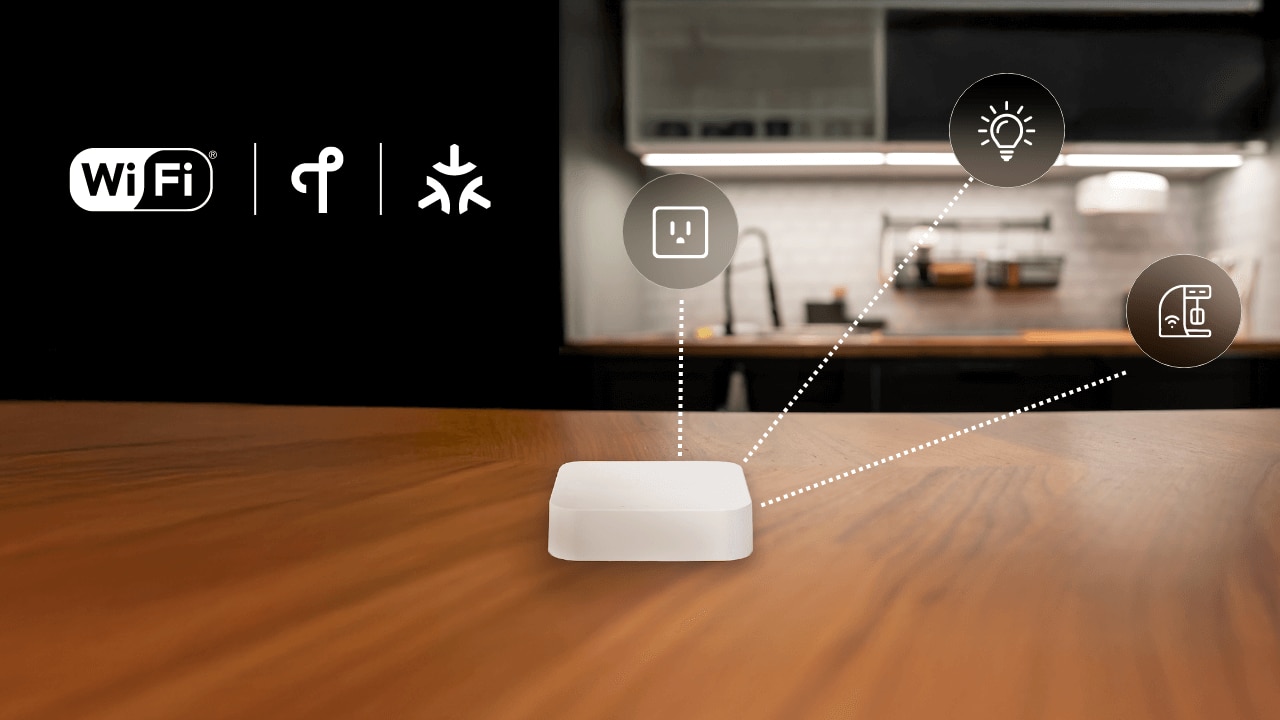
Matter は、実証済みの IP ベースの技術に基づいて構築された信頼性と安全性の高いワイヤレス・プロトコルにより、主要な IoT エコシステム間の統合を推進することで開発を簡素化し、エコシステムとメーカー間でデバイスを接続します。

注目の Matter over Wi-Fi および Matter over Thread 製品
ハードウェア

Wi-Fi 6 SoC とモジュール 条件を選択
列を選択
周波数帯域 アプリケーション MCU オンボード IP サポート 主な周辺装置
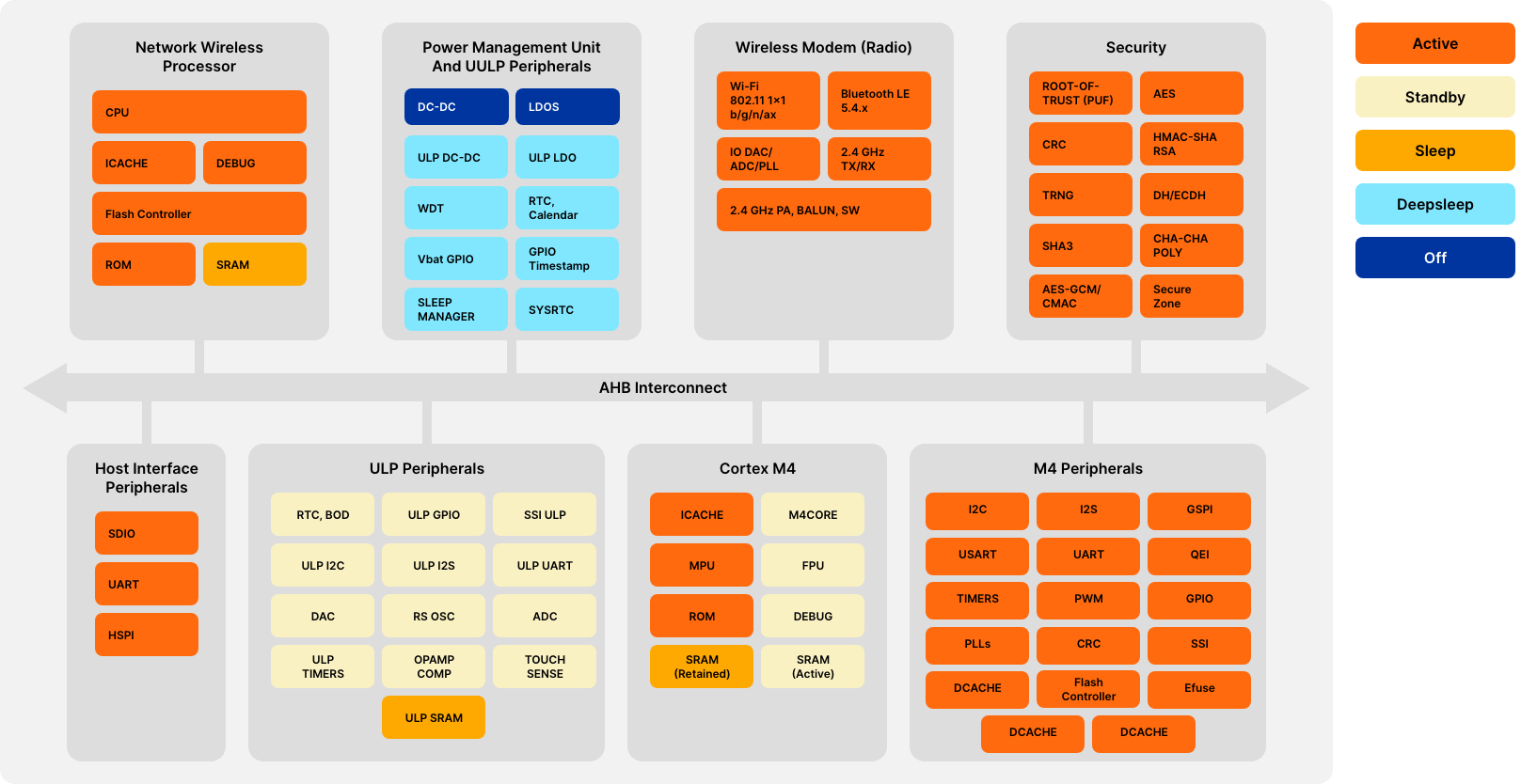
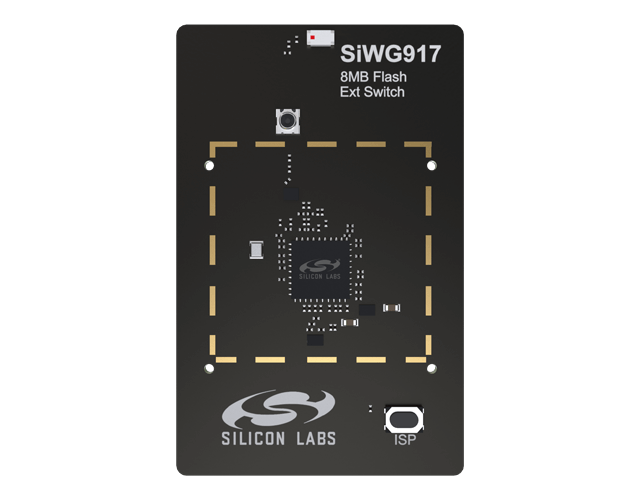
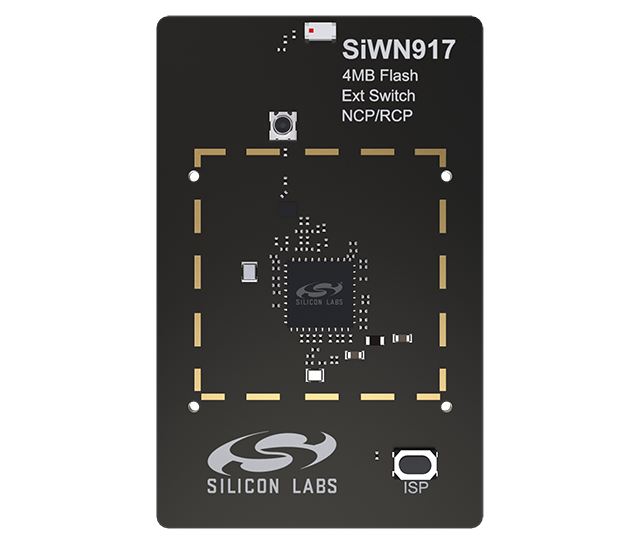
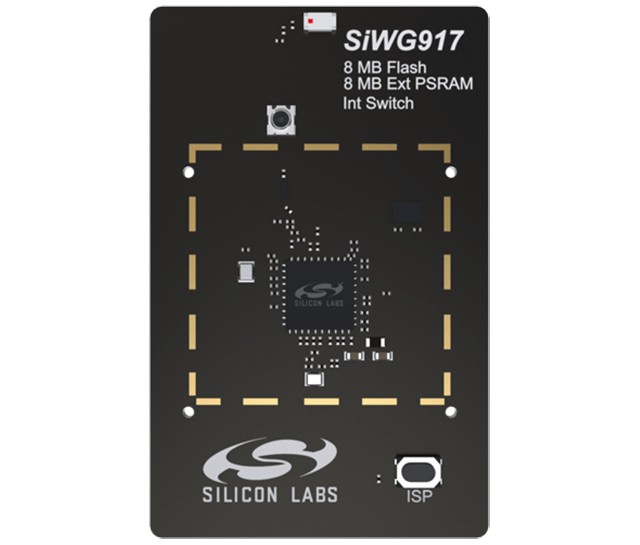
SiWx917 ワイヤレス SoC
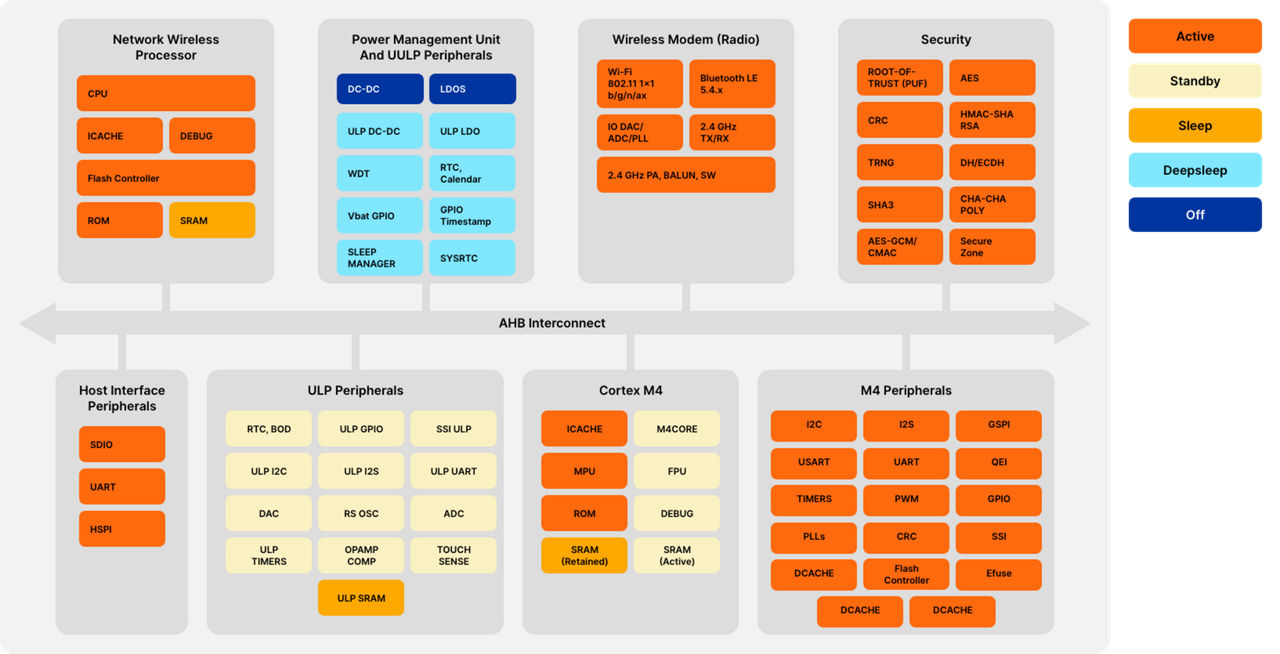
Wi-Fi 6 plus と Bluetooth LE 5.4
シングルバンド(2.4) SDIOSDIO、 SPISDIO、 SPI、 UART
SiWx917Y ワイヤレス・モジュール
シングルバンド(2.4) SDIO、 SPISDIO、 SPI、 UARTSDIO、 UART

A -> Z で並べ替え
Z -> A で並べ替え

値別にフィルタ…

Thread SoC およびモジュール 条件を選択
列を選択
スレッド認証 周波数帯域(MHz) フラッシュ(kB) RAM(kB) 出力電力範囲(dBm) MCU コア TX 電流(mA)0 dBm RX 電流(mA) RX 感度(dBm) セキュリティ GPIO
EFR32MG26 シリーズ 2 SoC
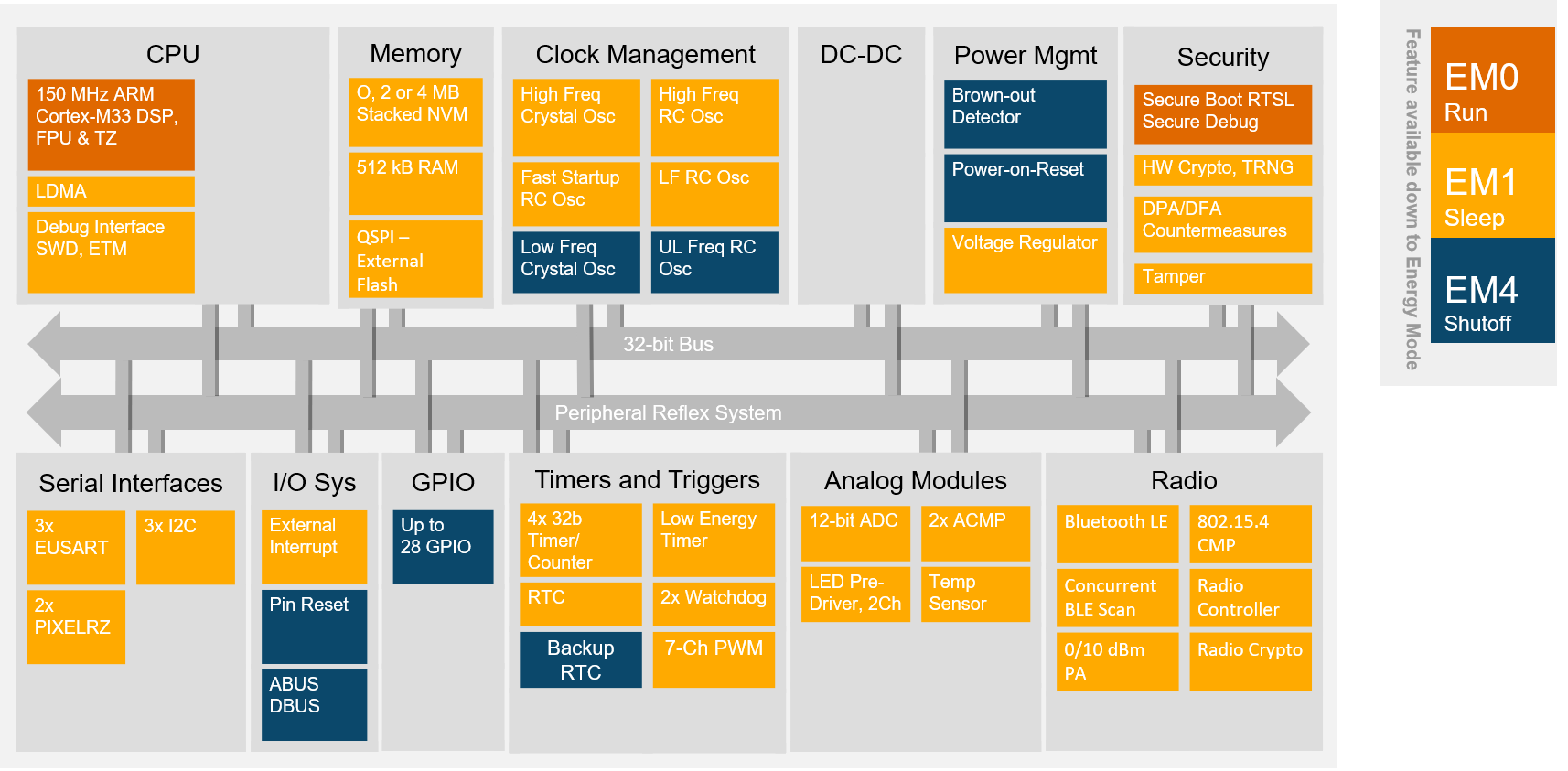
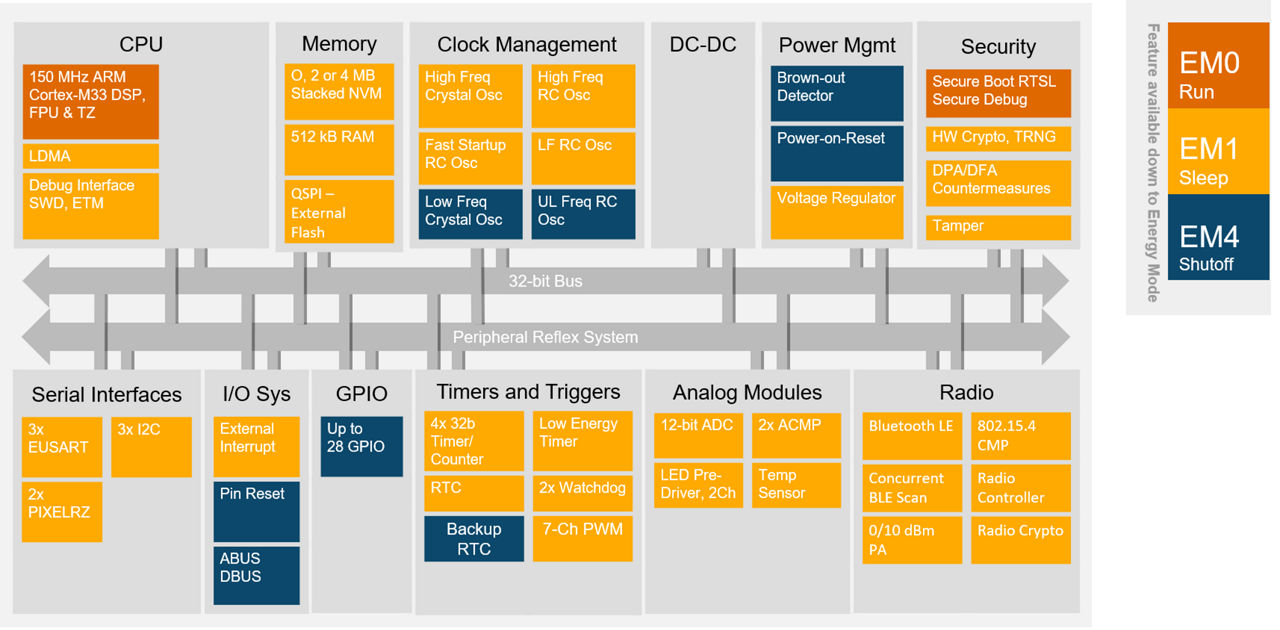
Zigbee および Thread EFR32MG26 SoC(シリーズ 2)
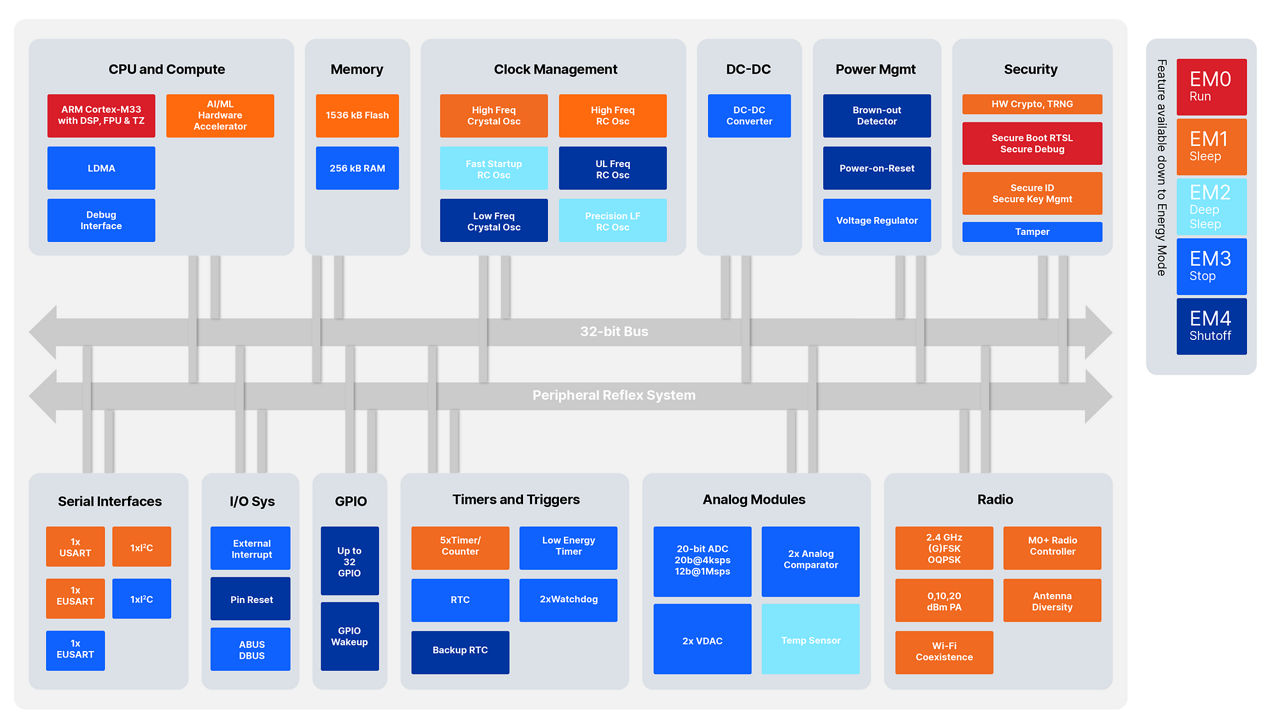
2.4 GHz 20483200 256512 -20 19.5 ARM Cortex-M33 5.9 6.2 -105.4 AES-128 AES-256 ECC SHA-1 SHA-2 安全なエンクレーブ 2832454964
EFR32MG26 シリーズ 2 モジュール
MGM260 モジュール (シリーズ 2)
2.4 GHz 3200 512 -33 20 ARM Cortex-M33 6.8 6.4 -105.8 AES-128 AES-256 ECC SHA-1 SHA-2 32
EFR32MG24 シリーズ 2 SoC
Zigbee および Thread EFR32MG24 SoC(シリーズ 2)
2.4 GHz 10241536 128192256 -20 19.5 ARM Cortex-M33 5.0 5.1 -105.4 (802.15.4) AES-128 AES-256 ECC SHA-1 SHA-2 安全なエンクレーブ 262832
EFR32MG24 シリーズ 2 モジュール
MGM240 モジュール (シリーズ 2)
2.4 GHz 1536 192256 -33.7 19.9 ARM Cortex-M33 4.8 5.25.97.7 -106 (802.15.4) AES-128 AES-256 ECC SHA-1 SHA-2 122632
EFR32MG21 シリーズ 2 SoC
Zigbee および Thread EFR32MG21 SoC(シリーズ 2)
2.4 GHz 5127681024 6496 -20 20 ARM Cortex-M33 9.9 9.4 -104.3 (250 kbps O-QPSK DSSS) AES-128 AES-256 ECC SHA-1 SHA-2 20
EFR32MG21 シリーズ 2 モジュール
MGM210 モジュール (シリーズ 2)
2.4 GHz 1024 96 -20 20 ARM Cortex-M33 16.1 9.4 -104 (802.15.4) AES-128 AES-256 ECC SHA-1 SHA-2 20

A -> Z で並べ替え
Z -> A で並べ替え

値別にフィルタ…

キットとボード

Matter 開発キット

Silicon Labs は、コンパクトで機能満載の低コスト・プロトタイピング・プラットフォームから、堅牢で安全なメッシュネットワーク用のマルチノード高度マルチプロトコル・キットに至るまで、さまざまなThreadおよびWi-Fi向けのMatterに準拠する開発キットを提供しています。あなたのニーズに最適なキットをこちらでご覧ください。

thread-logo-outline-grey.png

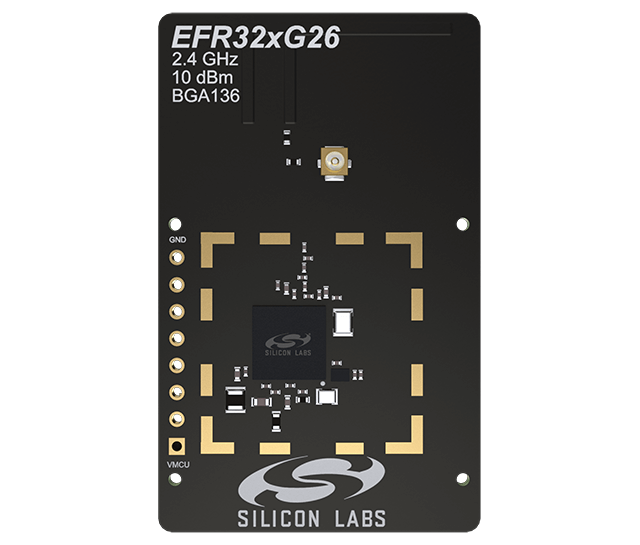
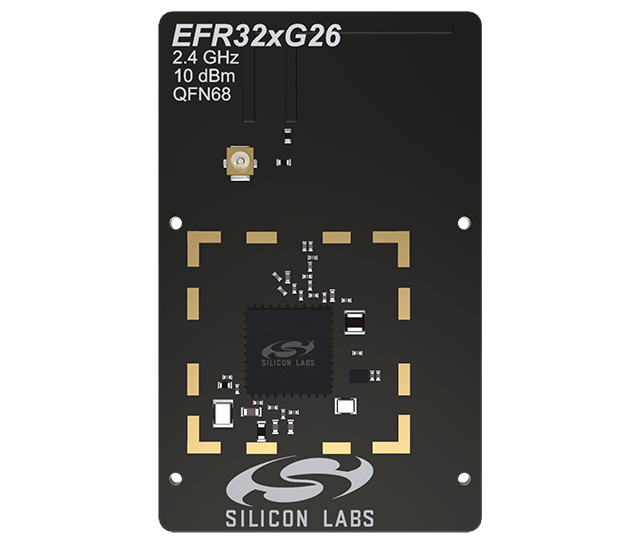
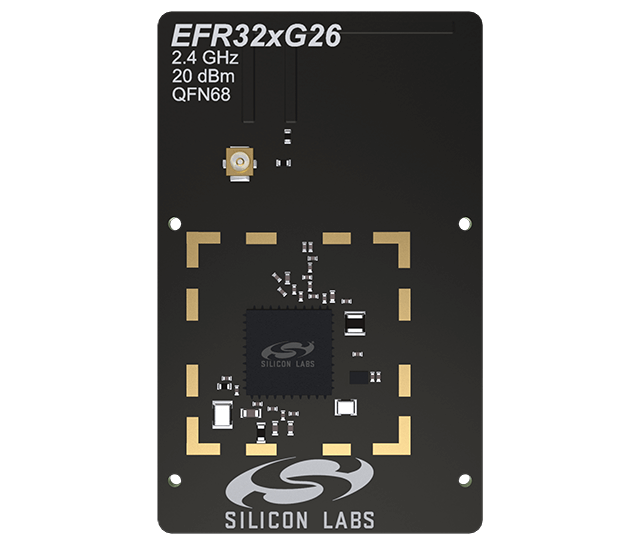
シリーズ 2 Matter Over Thread エンドデバイスとボーダールーター用開発キット

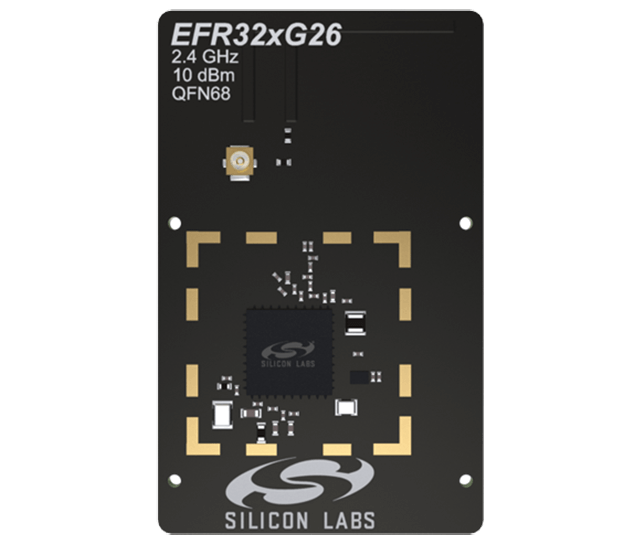
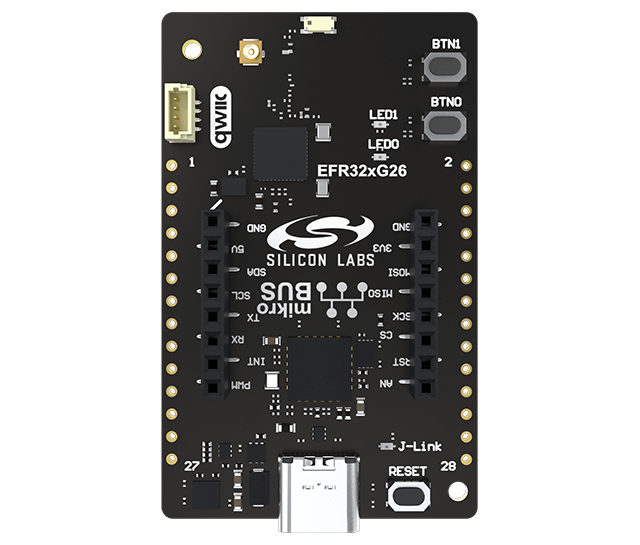
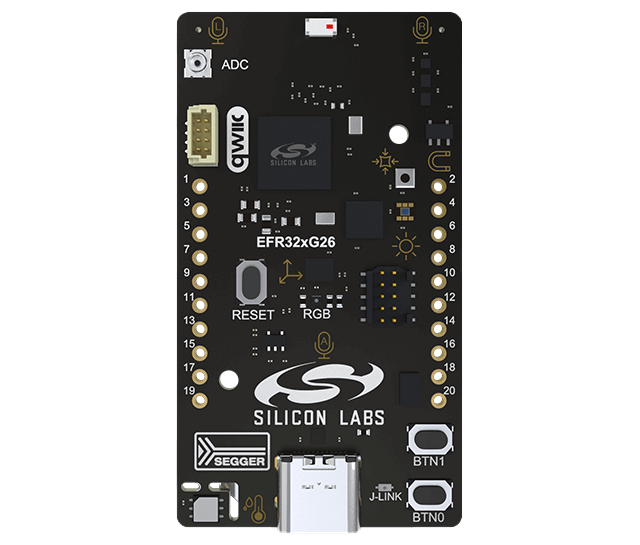
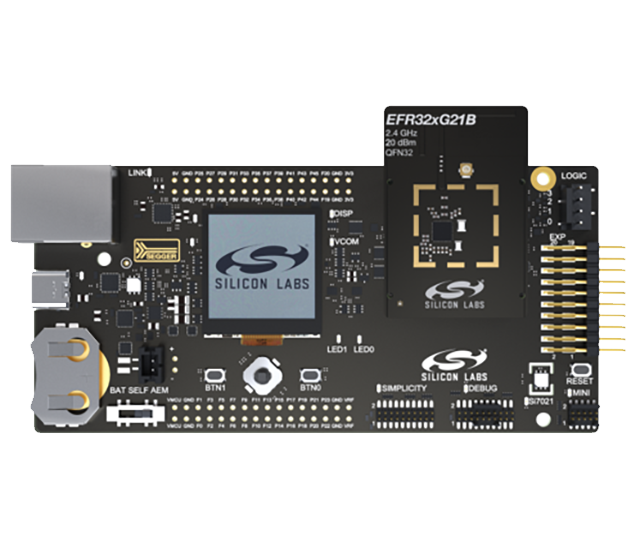
EFR32xG24 開発キットは、お客様の開発ニーズに合わせて最適化されたさまざまなハードウェアオプションを提供します。 Explorer キットを使用したラピッド・プロトタイピングであっても、開発キットを使用した概念実証と高度な機能開発、Pro キットを使用した高度な RF および消費電力テストなどの完全な開発でも、Silicon Labs は Matter over Thread 開発のニーズを満たすために適切な開発ハードウェアを提供します。


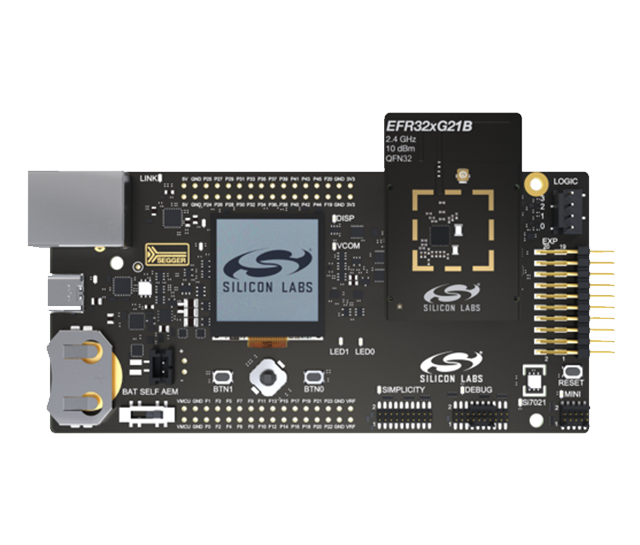
 シリーズ 2 OpenThread ボーダー・ルーター用開発キット

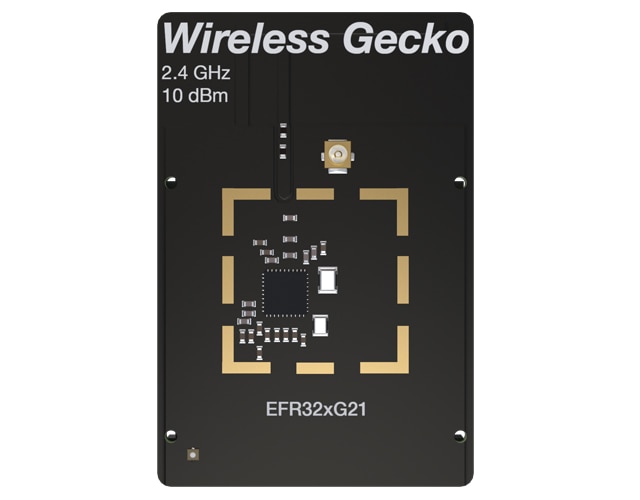
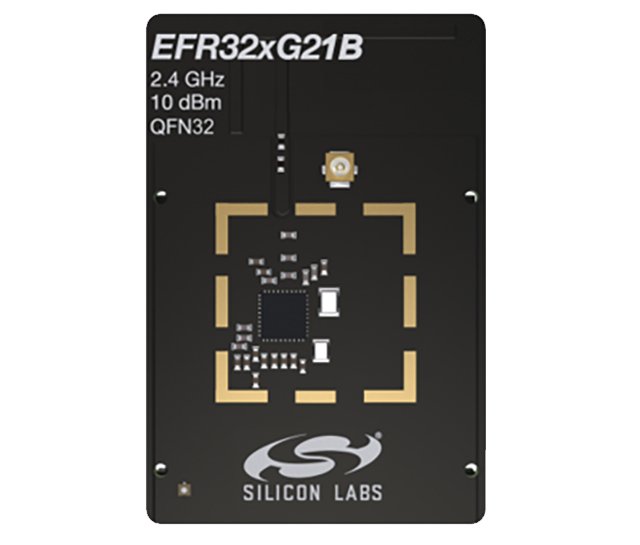
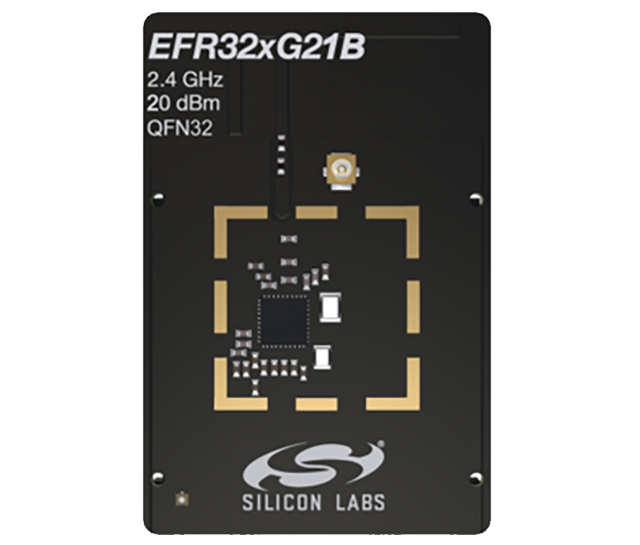
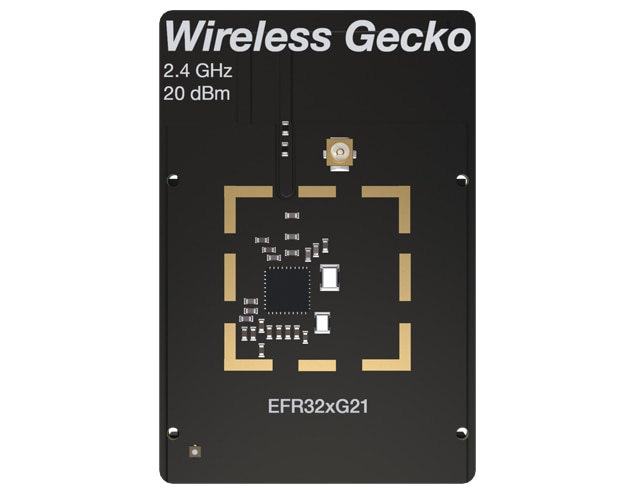
EFR32xG21 開発キットは、高度な RF 開発およびデバッグ機能を可能にする Pro キットを使用して、強化された RF 開発を可能にします。パケット・トレースを含む、オープン・スレッド・ボーダー・ルーター向けの堅牢な RF ソリューション。
wifi-logo-outline-grey.png

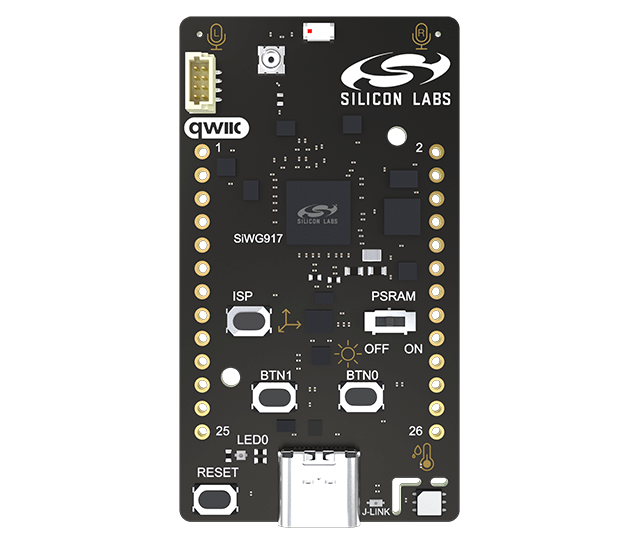
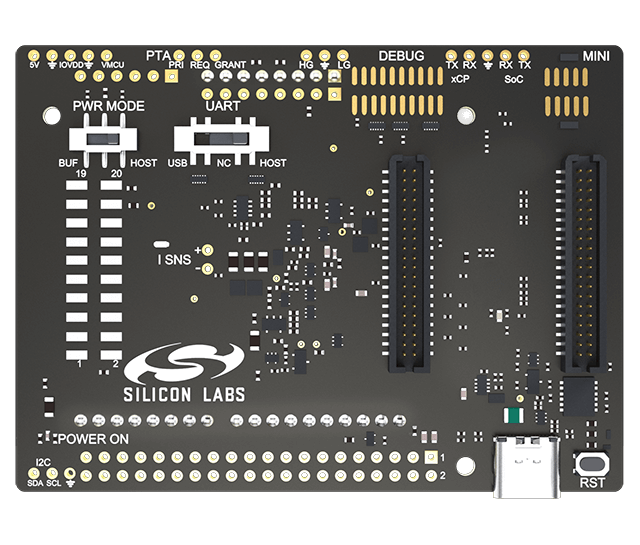
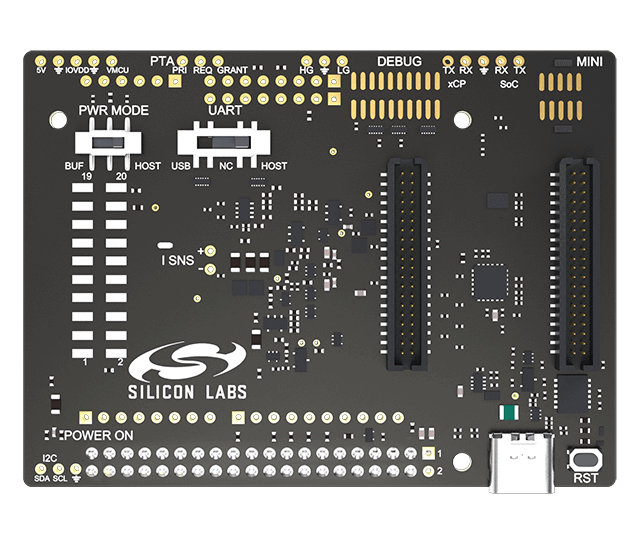
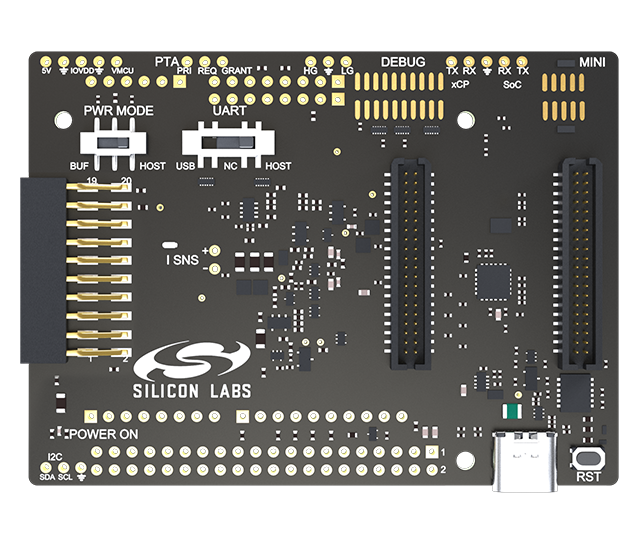
Wi-Fi over Matter 用開発キット

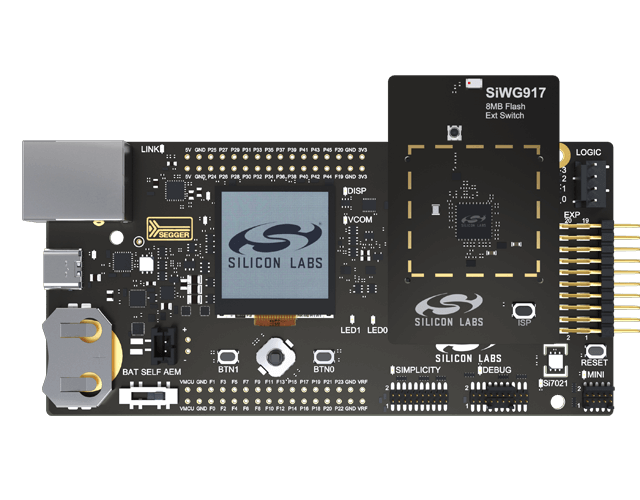
フル機能のアプリケーション開発キット

デモ

Matter Over Thread ブリッジング:
Zigbee と Z-Wave

Matter Over Wi-Fi および Thread

アプリケーション

注目の Matter アプリケーション

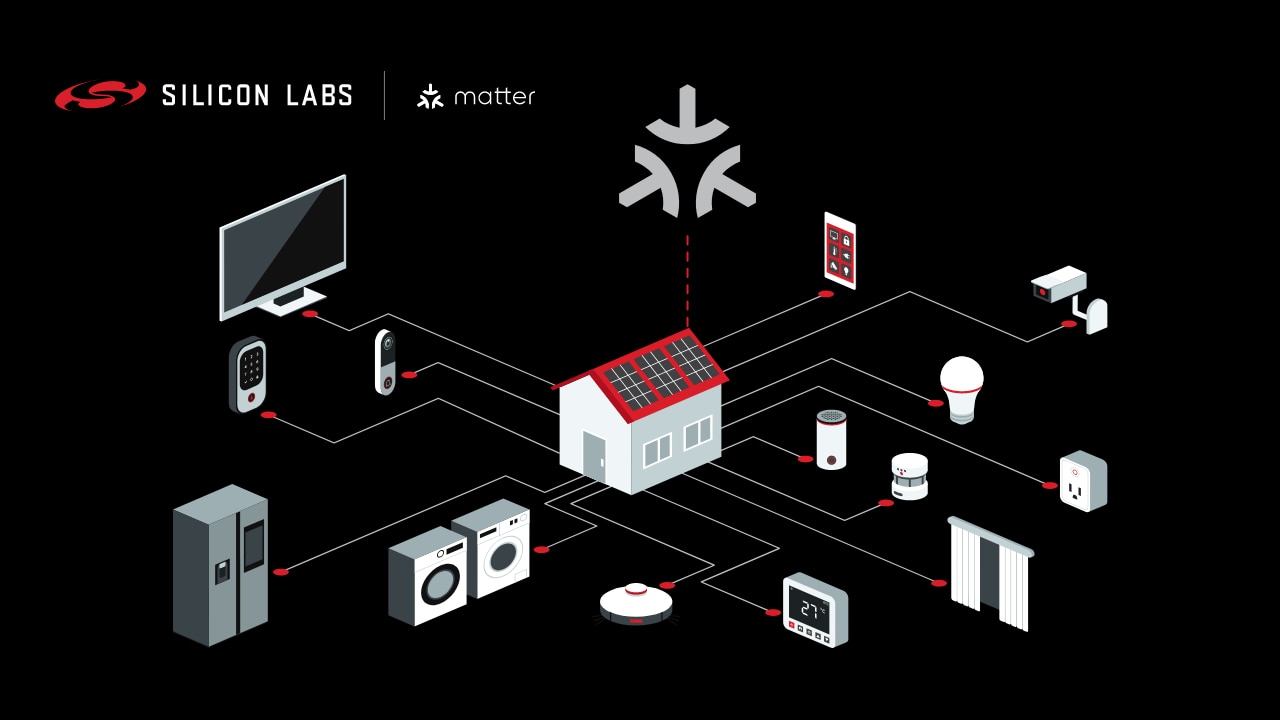
Matter 内での IP ネットワークのサポートだけでなく、ビルディング・オートメーションスマートホーム産業用 IoT、スマート市場にまたがる Silicon Labs の幅広い IoT ワイヤレス専門知識を活用することで、開発者は基盤となるネットワーク・プロトコルに関係なく、幅広いネットワークやデバイスを接続できます。

Matter について

IoT デバイス開発への統一アプローチ

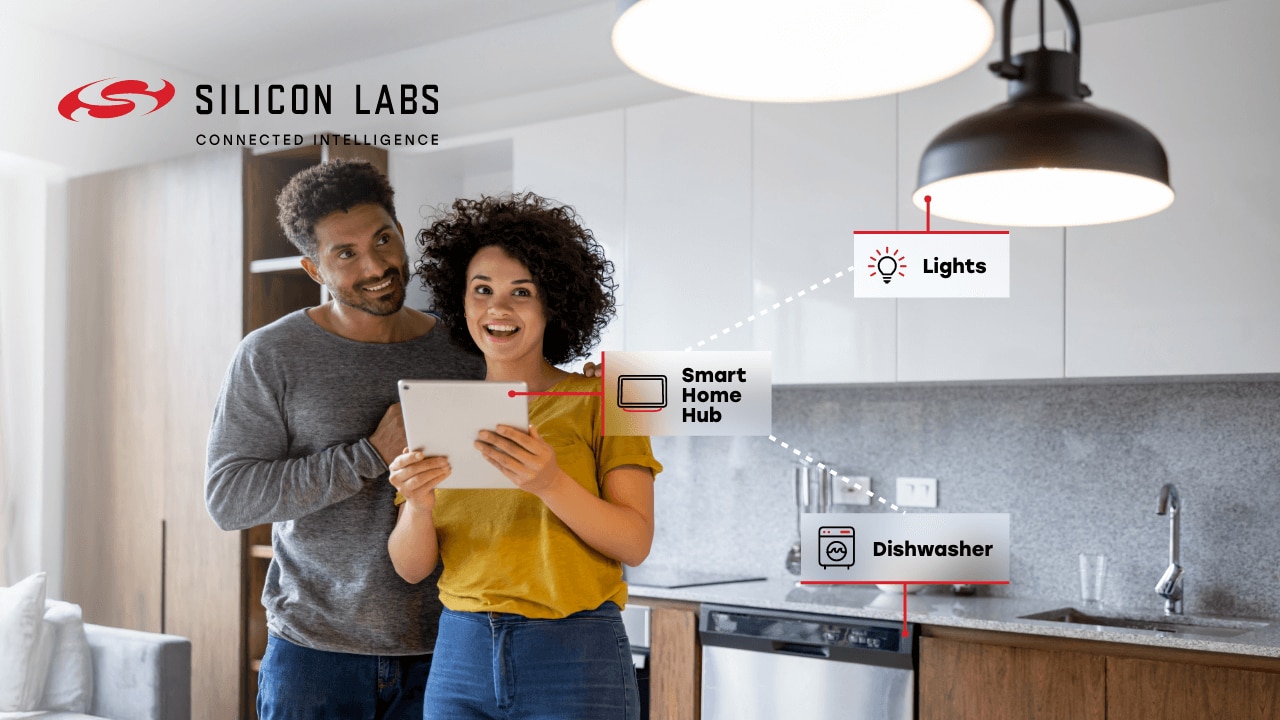
Matter は、主要なスマートホーム IoT エコシステム間の統合を推進し、1 つの簡単で信頼性が高く、安全なワイヤレス・プロトコルを作成して、家庭のすべての IoT デバイスとネットワークを接続します。


Matter、開発者と消費者のメリット

Matter は Wi-FiThread などの既存の IP テクノロジーを活用して、統一型ワイヤレス接続エコシステムを構築し、IP ベースのネットワーキングにより、メーカーは開発を簡素化しながら、消費者のデバイスの互換性を改善できます。Connectivity Standards Alliance(CSA)は、コネクテッド・エクスペリエンスがより信頼性が高く、安全で、効果的に連携するべきであるという信念に動機づけられており、デバイスメーカーが Amazon の Alexa、Apple® Siri®、Google Assistant™ など、スマートホームや音声サービスに対応するデバイスを簡単に構築できるように、Matter(旧 Connected Home over IP プロジェクト)を立ち上げました。

また、「セキュリティ・バイ・デザイン」と「ゼロ・トラスト」に基づくセキュリティ・アーキテクチャにより、さまざまな脅威に対する防御機能も構築されています。その一環として、Matter はすべてのメッセージが保護されるようにセキュリティ対策を構築します。

開発者のメリット:

  • アプリケーション・レイヤーの統合

    開発の簡素化、開発および運用コストの削減

  • オープンソース

    コミュニティのコラボレーションにより、品質の向上、プロセスの迅速な処理、より広範なユースケースをキャプチャ

  • 実証済みのテクノロジー

    開発者が既存の実装を活用できるため、製品化までの時間を短縮

  • IP クラス・セキュリティ

    適切に保護されたキーを使用したオープンソースで信頼できる標準の暗号化アルゴリズム

消費者のメリット:

  • Simplicity

    Matter 製品は、購入、設定、使用が簡単であるべきである

  • 互換性

    複数のブランドのデバイスがネイティブに連動

  • プライバシー

    消費者が、デバイスとの対話に関するプライバシーと許可を管理する

FAQ

Matter FAQs

Our experts have answered the most frequently asked questions about Matter. Click on each Matter FAQ to reveal the answer and additional resources. 

相互運用性:Devices from different brands work together seamlessly.

Simplicity: Easier setup and use for consumers.

Local reliability: Works primarily over the local network (less cloud dependence).

セキュリティ: Built-in, strong security by design.

IP-based: Runs on standard IP (Wi-Fi, Ethernet, Thread), simplifying development and scaling.

Camera support: Standardized smart cameras with live video, audio, and controls

Expanded closures: Better support for doors, garage doors, shades, gates

エネルギー管理: Grid signals, pricing, and energy-aware device control

New sensors: Soil moisture sensors for irrigation and gardening

Improved transport: TCP and large data support for video and updates.

Learn more about the Matter 1.5 spec.

Matter improves smart home interoperability by providing a single, IP-based standard that allows devices from different brands and ecosystems to work together seamlessly. It ensures consistent device behavior, secure commissioning, and local communication across platforms like Apple, Google, Amazon, and Samsung, reducing fragmentation and simplifying both development and user experience.

The future of Matter in smart home technology is continued expansion into more device categories, richer features, and deeper energy management, while strengthening security and reliability. As adoption grows across major ecosystems, Matter is expected to become the default smart home standard, simplifying development, reducing fragmentation, and enabling more seamless, intelligent, and scalable smart home experiences.

Silicon Labs has created the Matter Developer Journey, which is a web-based tool that helps guide you through getting started, development, and even deploying your Matter product. It also includes information along the way for the key Matter ecosystems.

Silicon Labs has a Matter Selector Guide to help you select the best technology and device for your product. With guidance on which technology, Matter-over-Wi-Fi or Matter-over-Thread, is best for different applications and device types, and comparison tables of our offerings, our Matter Selector Guide will speed your decision-making when developing your Matter products.

There is no inherent limit on the number of devices that the Matter standard supports in a single fabric.

No, users will not pay a royalty for software. The Matter stack software will be released under a permissive license, and the Connectivity Standards Alliance (CSA) has RANDZ licensing from its members.

Matter makes use of UDP messages with retries to provide reliability. This is known as the Message Reliability Protocol (MRP) and is provided by the Matter stack.

Yes. Matter requires devices be fully authenticated and authorized before joining the network and to make use of industry best practices for security establishment and encryption before and after joining the fabric. Matter requires a commissioner to obtain a device-specific passcode that is used as a shared secret during a Password Authenticated Session Establishment (PASE) to first communicate with the joining device. The commissioner also checks the device’s manufacturer-specific credentials to verify the authenticity of the device to ensure it is an official product, and checks the device against a Distributed Compliance Ledger (DCL) to verify it is an officially certified device. The device generates unique credentials that are signed by the commissioner for use as an operational certificate and then used to establish future communications with valid Matter devices on the same fabric. Lastly, Matter makes use of Access Control Lists (ACLs) to determine what devices on the same fabric are allowed to communicate with one another.

PSA Crypto APIs are provided by ARM. We integrate them on our hardware to manage keys in the most secure way.

Operational certificates are generated per fabric when the Matter device joins. A device will generate a public/private key pair and send a CSR (Certificate Signing Request) to the commissioner to be signed and returned. If you use Silicon Labs' Secure Vault enabled parts generate and store the private key internally, which greatly reduces the chance an attacker can gain access to that private key.

Silicon Labs Matter chips have the flexibility to support injecting pre-generated DACs during manufacturing or by having the device generate its own Public/Private Key pair on-chip that a manufacturer can sign, and thus avoid having the private key ever leave the device. The choice of which method to use is up to the manufacturer based on the logistics and needs of their manufacturing process. Furthermore, Silicon Labs has a Custom Part Manufacturing Service (CPMS) thatcan securely provision devices with Matter security material along with a device manufacturer’s own material to make the manufacturing process secure and easier to deploy Matter-enabled products.

Silicon Labs supports all released Matter device types, either directly in sample applications or by enabling support through ZAP. You can refer to the Matter SDK extension in Simplicity Studio for a list of supported device types. As for upcoming Matter device schedules from the CSA, you would need to join the CSA Working Groups to be a part of the discussion on new device type spec additions. A full list of existing devices can be found in the Matter Device Type spec from the CSA. The CSA updates the Matter specification twice a year, so this provides plenty of opportunities to quickly add new features and devices to the standard.

Matter has bridges as a native device type, so non-IPv6 networks can be incorporated into the Matter fabric via the bridge. Examples of these include Zigbee to Matter and Z-Wave to Matter bridges that allow those existing networks to be controlled by the Matter fabric. Learn more about Matter bridges.

Yes, Z-Wave to Matter bridges exist, but Matter does not natively support Z-Wave. Interoperability is achieved through hub-based bridges that translate Z-Wave devices into Matter devices. Examples include hubs from SmartThings, Home Assistant, and other gateway vendors, where Z-Wave devices appear as Matter devices to Matter ecosystems.

A Matter Compliant Platform (MCP) is a development environment - SDK plus hardware - that has been formally certified by the Connectivity Standards Alliance (CSA) for core Matter functionality. MCPs provide device makers with a certified foundation, including pre-tested commissioning, networking, and security features. By building on an MCP, manufacturers inherit these validated components, which reduces certification scope, lowers cost, accelerates time-to-market, and simplifies future recertification. Matter Compliant Platforms are essential because they ensure trust, interoperability, and faster innovation across the Matter ecosystem.

Silicon Labs helps certify a new Matter product by providing Matter-certified hardware platforms, production-ready SDKs, and pre-tested software stacks that align with CSA requirements. They also support developers with reference designs, compliance tools, interoperability testing guidance, and ecosystem expertise, helping reduce risk, speed up development, and streamline the Matter certification process.

This is called Multi-admin or Multi-fabric in Matter. This is a required function in the current Matter spec and implementation to allow for a device to be controlled by multiple ecosystems. There is ongoing work in the CSA working groups to improve the user experience for multiple admin scenarios.

This is permitted by the Matter Standard. It ultimately depends on the device’s capabilities, such as available Flash, RAM, and some other logistics (such as how the manufacturer can convey the Matter QR Code so it can be commissioned, when the product has already been shipped without one). We already see examples of this for deployed devices in the field for Matter-over-Thread and Matter-over-Wi-Fi. In addition, many hubs (Zigbee for example) are being upgraded in the field to bridge their non-Matter devices to Matter and they use their own mobile apps to facilitate that.

It is possible to design a product outside the list of specified Matter device types, or extend an existing device type, but that would only work if you are building both the controller and the end device sides. The new device type or feature wouldn’t work with the other released controllers due to proprietary devices and features from existing ecosystems.

A border router is a device defined by the Thread protocol that routes IP traffic from the Thread network to other IP networks like Wi-Fi or ethernet. This is different from a typical IoT gateway because it does not stop the traffic and translate at the application level, it simply takes the Thread packet and IP address and puts it into the other IP network format to seamlessly pass the packet through. Learn more about OTBRs.

Ecosystems like Google Home, Apple Home, Samsung SmartThings, and Amazon Alexa are ready to develop Matter devices today. They provide platforms and guides to build and test. If you use our Dev Kit with your own Matter sample apps, or use one of our many Matter sample apps that are provided in the Matter SDK in Simplicity Studio, then you can use a device like the Nest Hub and the Google Home app to test and control. Our Matter Developer Journey can help.

Devices that are upgraded in the field to Matter would need a means to install a DAC onto the device, as well as install the Matter Passcode. This could be done in a couple of different ways, though this is outside the Matter specification. Two examples: a device could use a manufacturer’s own mobile App via Bluetooth LE, or the device could reach out to a manufacturer’s cloud service to securely generate or download the DAC and private key.

Yes, devices that meet security requirements and have sufficient resources available can be OTA updated to Matter. We already see examples of this for deployed devices in the field for both Thread and Wi-Fi devices that can be upgraded to support Matter.

Silicon Labs supports field upgrade of manufacturing certificates if using our Provisioner Firmware component included embedded within the Production Firmware. The specific details of how certificates are conveyed to the Matter device are not standardized within CSA and thus would be up to the manufacturer to manage. In other words, they would have to handle the communication mechanism to transfer the certificates to the device (Bluetooth LE, IP, etc.) and the generation of the unique data for each device (certificate, passcode, and discriminator).

Yes, Silicon Labs products fully support Matter clusters through their Matter-ready wireless SoCs and SDKs. Silicon Labs’ Matter software stack implements the standard Matter clusters and device types, enabling developers to build, customize, and certify interoperable Matter devices across Thread, Wi-Fi, and Ethernet platforms.

The main challenges with cross-fabric Matter communication include managing multiple fabrics securely, synchronizing device state across ecosystems, and handling differing platform policies and feature support. Devices must maintain separate credentials and access controls per fabric, which increases complexity, memory usage, and testing effort while ensuring consistent behavior across Apple, Google, Amazon, and other Matter fabrics.

The main challenges with Matter’s multi-admin include managing multiple fabrics and credentials, higher memory and storage requirements on devices, and increased complexity in access control and state consistency. Supporting multiple administrators also adds commissioning, testing, and user-experience complexity, especially when different ecosystems expose or handle features differently.

Matter-over-Thread generally provides equal or better battery life than Zigbee. Thread is designed for low-power, IP-based networking with efficient sleep modes and optimized routing, while Matter adds minimal overhead on top. In practice, battery life depends more on device design and usage, but Thread is typically better suited for long-lived, battery-powered Matter devices.

No, users will not pay a royalty. The software is released under a permissive license, and the Connectivity Standards Alliance (CSA) has RANDZ licensing from its members.

No. PSA Crypto APIs are provided by ARM. Silicon Labs integrates them on its hardware to manage keys securely.

Silicon Labs devices support both approaches:

  • Injecting pre-generated DACs during manufacturing
  • Having the device generate its own public/private key pair on-chip so the private key never leaves the device

The choice depends on the manufacturer’s logistics and manufacturing process requirements.

Silicon Labs also provides a Custom Part Manufacturing Service (CPMS) that can securely provision Matter security material along with manufacturer-specific material to simplify secure deployment of Matter products.


開発者体験

Silicon Labs は、Matter 開発者体験のあらゆるステップでお客様をサポートします。

当社は、主要なエコシステムプロバイダーの道筋を案内するなど、プロジェクトの各段階においてお客様を支援することで、Matter デバイスの開発を加速することができます。

Works With 2025 オンデマンドIoTトレーニング

今年の主要IoTカンファレンスで行われた、すべての基調講演、ファイヤーサイド・チャット、詳細なトレーニングを、もう一度体験しましょう。つながる未来を形作る知見、イノベーション、インスピレーションを、いつでもどこでも、自分に合った方法でストリーミングできます。

閉じる
ロードの結果
閉じる
Powered by Translations.com GlobalLink OneLink Software